Buddha Online
I wanted to know how a computer sees the Buddha.
Compared to chess, or to the concrete objects of everyday life, the sacred — religion, spiritual experience — must be far more abstract, far harder for a machine to grasp. Perhaps this is the key distinction between artificial intelligence and human intelligence. Or perhaps not. That uncertainty is what made the project interesting.
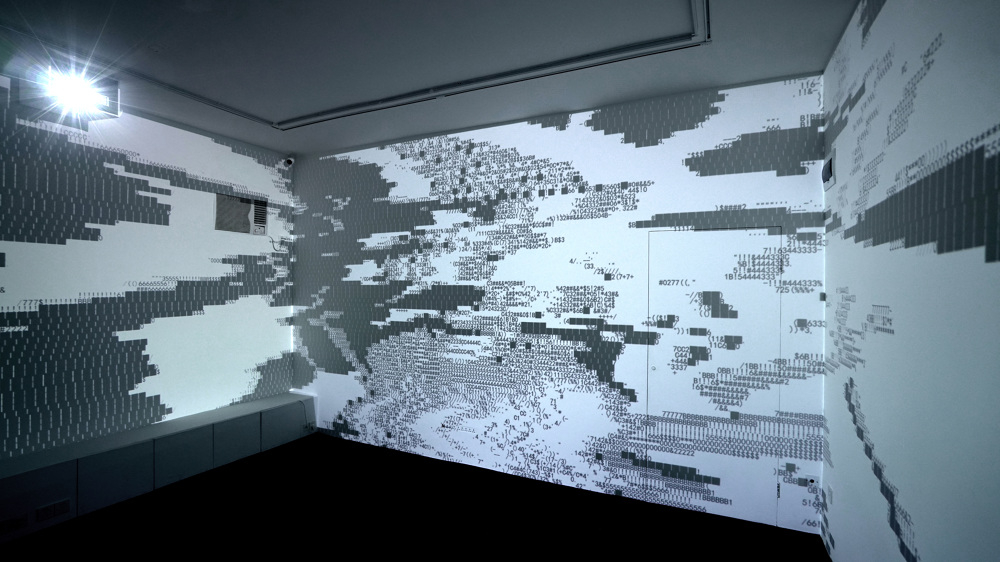
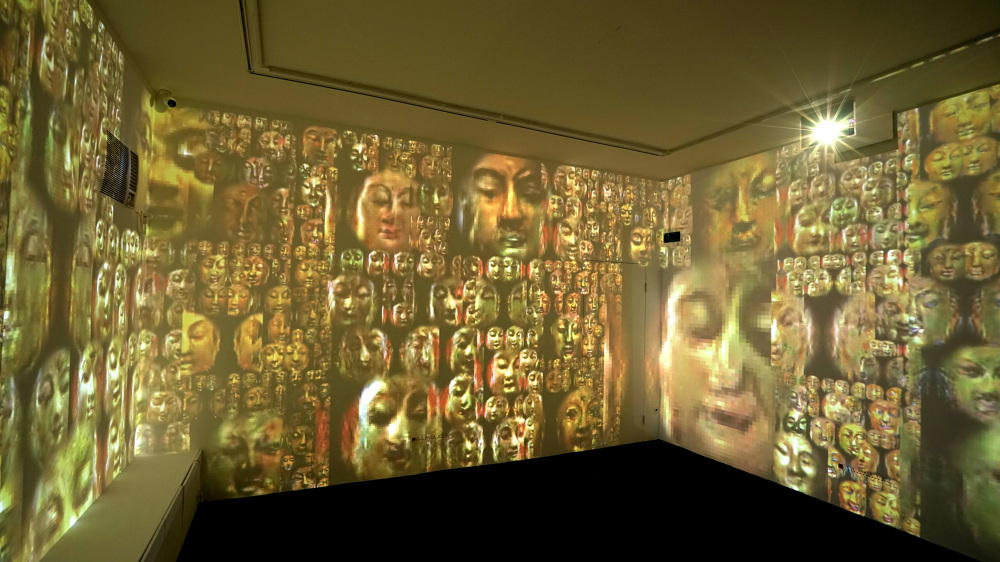
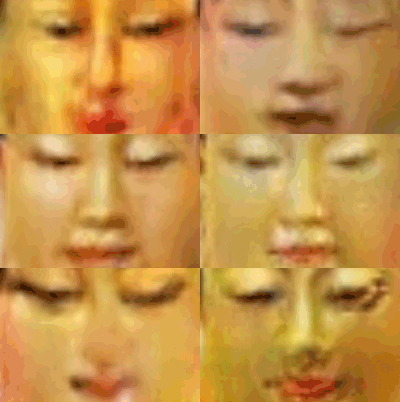
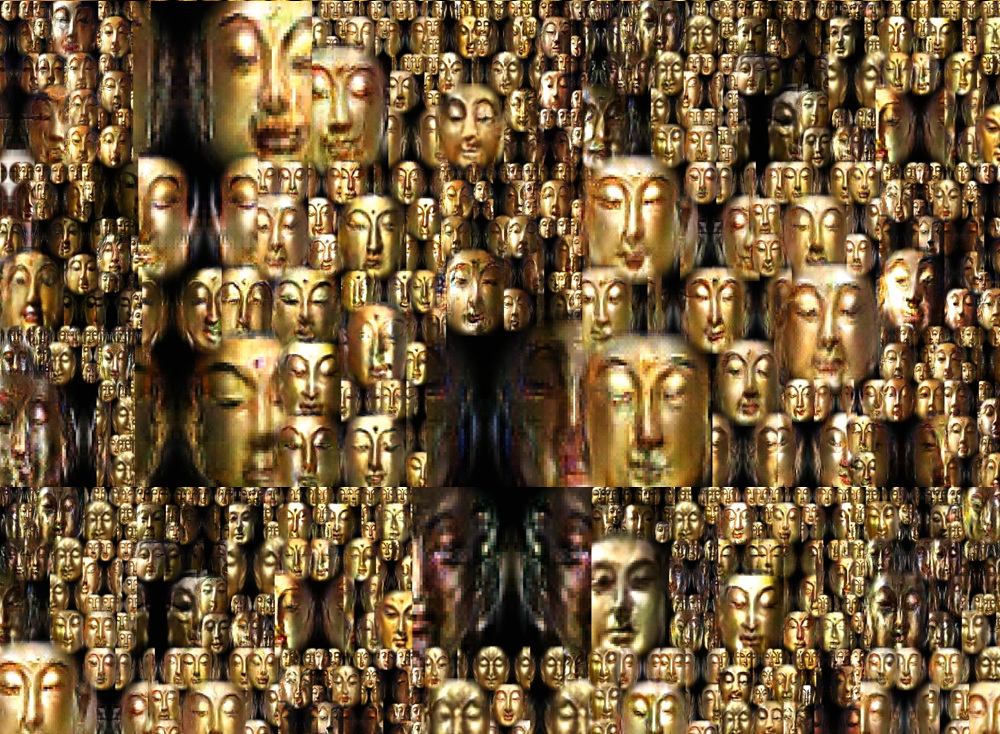
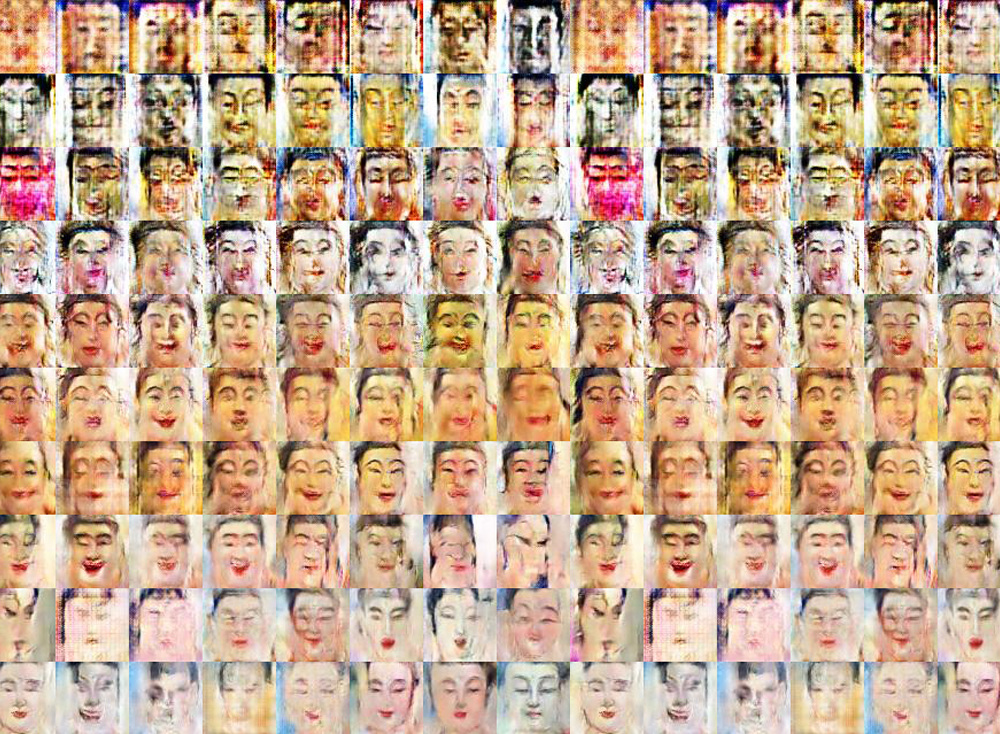
I used a DCGAN (Deep Convolutional Generative Adversarial Network) — a classic architecture from GitHub — to find out. I scraped thousands of Buddha images from the web, assembled them into a dataset, and let the machine begin to learn. Over hundreds of training epochs, the generated Buddhas moved visibly: from pure noise, to faint contours, to composed and dignified forms, and then into something stranger — as if the accumulated visual fragments of centuries of Buddhist art were layering over one another, as if the computer were dreaming about the Buddha.
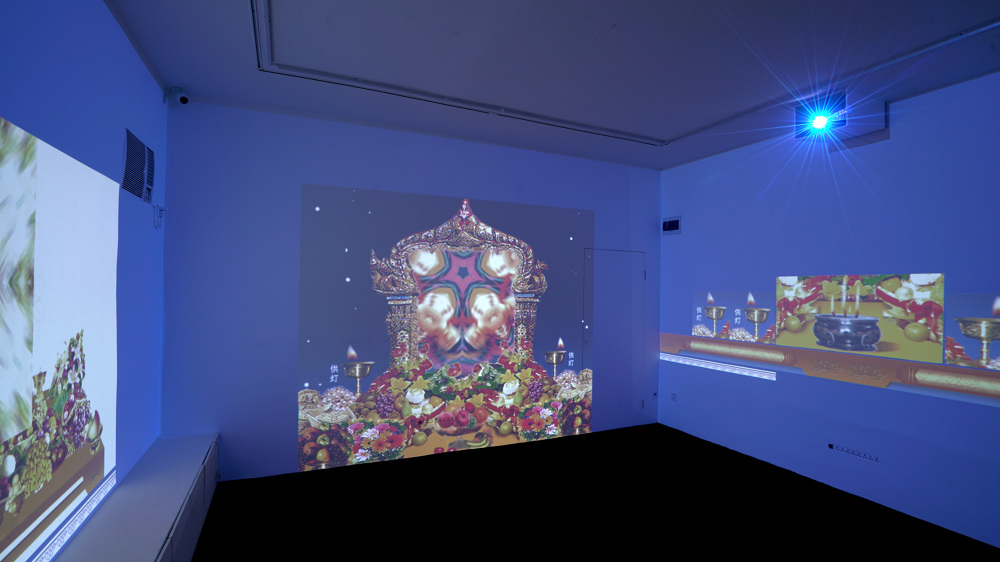
For the exhibition, I spread these generated images across the gallery walls, attempting to construct a Temple of Ten Thousand Buddhas where the real and the artificial blur. Standing inside, you feel the weight of a millennia-long visual tradition — and at the same time, something vertiginous, like being inside a dream. I found myself drawn in.
2017, solo exhibition, REFORMERart, No.5 Hunan Road, Shanghai
---
layout: work.njk
title_zh: 万佛神殿
title_ja: 万仏神殿
title_en: Buddha Online
year: 2017
cover: /images/2017-buddha-online/poster.jpg
video: https://vimeo.com/232684097
description: "A solo exhibition in Shanghai, 2017. Thousands of Buddha images fed into a DCGAN neural network — exploring how AI perceives the spiritual and sacred."
workTags:
  - installation
  - software
---

<div class="gallery">
    <img loading="lazy" src="/images/2017-buddha-online/space_1.png" alt="万佛神殿 — 展览空间全景">
    <img loading="lazy" src="/images/2017-buddha-online/space_2.png" alt="万佛神殿 — 展墙佛像矩阵">
    <img loading="lazy" src="/images/2017-buddha-online/space_3.png" alt="万佛神殿 — 展厅局部">
</div>

<div lang="zh">

我想知道计算机如何看待佛。

相对于围棋或人类社会中的具体事物,宗教、精神世界对人工智能来说一定更加抽象、更难以理解。这也许正是区分人工智能与人类智能的关键——或者也不一定呢。正是这个不确定性,让这个项目变得有趣起来。

我用 GitHub 上经典的 DCGAN(深度卷积对抗网络)算法展开这次尝试。用在线工具下载成千上万张佛像图片组成数据集,让计算机开始学习。经过几百代的训练,能明显看到生成的佛像从一片混沌,变得有轮廓,变得仪态端庄,又变得匪夷所思——仿佛是人类几千年佛教视觉碎片的相互叠加,就像计算机做了一个关于佛的梦。

展览把这些生成的佛像横向在空间展开,试图创造一个真实与虚拟难以区分的万佛神殿。在空间里徘徊,似乎能感受到几千年的宗教视觉积淀,又有一种梦境般不真实的眩晕感。我会不由得迷恋其中。

2017年,个展,[REFORMERart](https://www.facebook.com/reformerart/),上海市徐汇区湖南路5号

</div>

<div lang="ja">

コンピューターが仏をどう見るのか、知りたかった。

囲碁や日常生活の具体的な事物と比べて、宗教や精神的な体験は、機械にとってはるかに抽象的で、理解しがたいはずだ。それこそが人工知能と人間の知性を分かつ本質かもしれない。あるいは、そうでないかもしれない。その不確かさが、このプロジェクトを面白くした。

GitHubで公開されているDCGAN(深層畳み込み生成対抗ネットワーク)を使い、試みを始めた。ウェブから数千枚の仏像画像を収集してデータセットを組み、機械に学習させた。何百エポックもの訓練を経て、生成される仏像は目に見えて変化した。純粋なノイズから、かすかな輪郭へ、威厳ある姿へ、そしてより奇異なものへ——まるで何世紀にもわたる仏教美術の視覚的な断片が幾重にも重なり合うように、コンピューターが仏について夢を見ているかのようだった。

展覧会では、生成された仏像をギャラリーの壁一面に広げ、現実と虚構が溶け合う「万仏神殿」を構築しようとした。その空間に立つと、千年以上にわたる視覚的伝統の重さを感じると同時に、夢の中にいるような眩暈に似た感覚が押し寄せてくる。気づけば、その世界に引き込まれていた。

2017年、個展、[REFORMERart](https://www.facebook.com/reformerart/)、上海市徐匯区湖南路5号

</div>

<div lang="en">

I wanted to know how a computer sees the Buddha.

Compared to chess, or to the concrete objects of everyday life, the sacred — religion, spiritual experience — must be far more abstract, far harder for a machine to grasp. Perhaps this is the key distinction between artificial intelligence and human intelligence. Or perhaps not. That uncertainty is what made the project interesting.

I used a DCGAN (Deep Convolutional Generative Adversarial Network) — a classic architecture from GitHub — to find out. I scraped thousands of Buddha images from the web, assembled them into a dataset, and let the machine begin to learn. Over hundreds of training epochs, the generated Buddhas moved visibly: from pure noise, to faint contours, to composed and dignified forms, and then into something stranger — as if the accumulated visual fragments of centuries of Buddhist art were layering over one another, as if the computer were dreaming about the Buddha.

For the exhibition, I spread these generated images across the gallery walls, attempting to construct a Temple of Ten Thousand Buddhas where the real and the artificial blur. Standing inside, you feel the weight of a millennia-long visual tradition — and at the same time, something vertiginous, like being inside a dream. I found myself drawn in.

2017, solo exhibition, [REFORMERart](https://www.facebook.com/reformerart/), No.5 Hunan Road, Shanghai

</div>

<div class="gallery">
    <img loading="lazy" src="/images/2017-buddha-online/face.gif" alt="万佛神殿 — DCGAN 生成过程动画">
    <img loading="lazy" src="/images/2017-buddha-online/wall.png" alt="万佛神殿 — 佛像墙面铺陈">
    <img loading="lazy" src="/images/2017-buddha-online/changing.png" alt="万佛神殿 — 训练中的生成变化">
</div>